Transforming Healthcare Through Secure AI Collaboration: Insights from Our CHAI Webinar

As CEO of ScriptChain Health, I’m excited to share key insights from our recent CHAI webinar, where we demonstrated how privacy-enhancing technology is revolutionizing the way AI solutions are validated and deployed in healthcare. Our collaboration with Morehouse School of Medicine exemplifies a new paradigm—one where innovation, patient privacy, and clinical precision converge to deliver measurable impact.

The Challenge: Congestive Heart Failure Readmissions

Congestive heart failure (CHF) readmission rates remain a critical challenge for healthcare systems nationwide. At ScriptChain Health, we’ve developed an AI-powered solution designed to identify at-risk patients and intervene with targeted food and exercise programs. However, like many AI developers in the digital health space, we faced a fundamental question: How do we prove our model works on diverse patient populations without compromising data security or privacy?

This is where our partnership with Morehouse School of Medicine became transformative.

The Power of Localized Validation

One of the most significant barriers in AI procurement is the gap between promise and proof. Healthcare providers rightfully demand evidence that AI models will perform effectively on their patient populations—not just on publicly available datasets that may not reflect the demographic and clinical characteristics of the communities they serve.

Morehouse School of Medicine understood this challenge intimately. Their patient population required localized qualification of our model to ensure clinical efficacy. Through the CHF Collaborative they established, Morehouse made clinical data available for AI model validation—but with a critical requirement: absolute protection of patient privacy and institutional intellectual property.

Security-First Innovation: The EscrowAI Approach

This is where digital health assurance and engagement security become paramount. Traditional AI validation often requires sharing sensitive clinical data directly with vendors—a process fraught with privacy concerns, lengthy approval cycles, and compliance obstacles.

Our validation effort leveraged BeeKeeperAI’s EscrowAI platform, which enabled us to run our patient-finding AI model on Morehouse’s CHF dataset within a secure, privacy-enhancing environment. The benefits were multifaceted:

For Morehouse School of Medicine:

  • Demonstrated model performance on their specific patient population
  • Streamlined institutional approval processes
  • Maintained complete patient privacy protection throughout the validation

For Beekeeper AI:

  • Offer HIPAA compliant infrastructure
  • Secure infrastructure that allows no IP to become public for either party involved in any use of the platform
  • Generates metrics according to the data description involved 

For ScriptChain Health:

  • Protected our proprietary AI intellectual property
  • Accelerated time-to-validation on real-world clinical data
  • Optimized model performance for diverse patient demographics
  • Demonstrated measurable ROI to stakeholders

For Patients:

  • Their sensitive health information remained secure and private
  • They benefited from more precisely validated AI solutions
  • Healthcare providers could confidently deploy interventions backed by localized evidence

Best Practices and Key Learnings

Our collaboration yielded several best practices that I believe will shape the future of digital health innovation:

Synthetic Data as a Bridge: Morehouse provided synthetic data that allowed us to familiarize ourselves with their clinical data structure before running our model on identifiable information. This approach enhanced efficiency while maintaining security protocols.

Clear AI Evaluation Metrics: Establishing transparent performance metrics from the outset enabled both parties to assess real-world effectiveness and demonstrate return on investment to decision-makers.

Stakeholder Alignment: Privacy-enhancing collaboration platforms dramatically shortened sales cycles by addressing the primary concerns of clinical, compliance, and procurement stakeholders simultaneously.

Looking Ahead: The Future of Digital Health Assurance

The success of this validation project represents more than a technical achievement—it demonstrates a viable path forward for the entire digital health ecosystem. We’re now converting healthcare systems in our pipeline to paid customers with confidence, knowing our solution has been validated on diverse, real-world patient populations.

Our near-term focus at ScriptChain Health extends beyond CHF readmissions. We’re targeting metabolic health more broadly, applying the same rigorous, privacy-preserving validation approach that made our Morehouse collaboration successful.

Meanwhile, Morehouse is expanding the CHF Collaborative by integrating additional data sources and inviting more data stewards to participate—creating a growing resource for AI innovation that maintains the highest standards of privacy and security.

A New Standard for Digital Health

The collaboration between ScriptChain Health, Morehouse School of Medicine, and BeeKeeperAI illustrates what’s possible when we prioritize three essential pillars:

  1. Engagement: Creating collaborative frameworks where healthcare providers and AI developers work together toward shared goals
  2. Digital Health Assurance: Validating AI solutions on representative patient populations to ensure clinical efficacy
  3. Security: Protecting patient privacy and institutional IP without sacrificing the pace of innovation

As we continue to advance AI applications in healthcare, this model of privacy-enhancing collaboration will become increasingly critical. The technology exists. The frameworks are proven. Now it’s time for the digital health industry to embrace this new standard—one where innovation and security are not competing priorities, but complementary imperatives.

At ScriptChain Health, we’re proud to lead by example, demonstrating that you don’t have to choose between moving fast and protecting what matters most. The future of healthcare AI is both secure and transformative—and that future is already here.


For more information about ScriptChain Health’s CHF readmission solution or to learn about privacy-enhancing AI validation for your organization, please visit our website.


In generative AI, do RAFTs achieve better results than simple RAG?

GenAI has grabbed many headlines lately, though the tech is not monolithic. There are different types of frameworks and sub technologies that fall under the GenAI umbrella, with some being more impactful than others, argues Moh Noori, CEO and founder of ScriptChain Health.

Currently, some of the most impactful use cases of generative artificial intelligence (GenAI) involve creating knowledge databases so that natural language interfaces have access to them. The purpose of this is to help working professionals in different industries find solutions to questions they may have. GenAI models face obstacles, however, not the least of which is the fact that they are often time consuming and costly due to the billions of parameters associated with them. With GenAI models, one must ensure that they are performing at their peak and consider the two main methods for building out their architecture – domain-specific fine tuning and retrieval augmented generation (RAG). 

A group of researchers may have come up with a much better approach. The team developed a framework called retrieval augmented fine tuning (RAFT), a method that produces more effective results than either RAG or fine tuning that is only domain-specific. To test out their theory, the team of researchers used Microsoft Studio and an open source LLM called Llama 2 for their cloud computing. Readers who would like to check out the github repo on how the framework was built may refer to this link to the repository.

The RAFT method

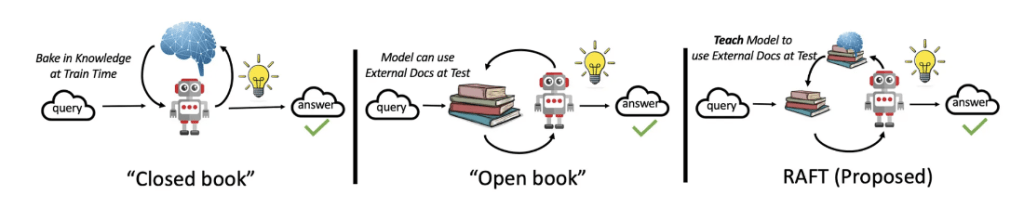
In traditional RAG, when a query is presented to a model it fetches several documents from an index that are likely to contain relevant information. These documents serve as the context for generating an answer to the user’s query.

Fine-tuning allows the model to respond akin to a student in a closed-book exam. By contrast, RAG operates more like an open-book exam where the student has access to a textbook, facilitating easier answers due to the broader availability of information.

Both methods have significant drawbacks, however. Fine-tuning confines a model to its training data, leading to potential inaccuracies and fabrications. As for RAG, while grounded in retrieved documents, it may also include irrelevant documents due to semantic proximity.

To address RAG’s limitations, the research team that came up with RAFT proposed a solution inspired by students preparing for open book exams. RAFT prepares a model by familiarizing it with relevant documents beforehand. This approach involves creating a synthetic dataset with questions, associated documents – both relevant and irrelevant – generated answers, and explanatory passages. By fine-tuning models like Meta Llama 2 7B using this data, RAFT enhances a model’s adaptation to specific domains and improves the accuracy of answers derived from retrieved contexts. One ought to try the framework using a smaller LLM to lower the training and inference times. This enables one to measure and see how effective a model can be without exposing it to overfitting. The Llama 2 model is also a good baseline model that has lower latency inferences, making it a good model for A100 graphics processing units (GPUs) that can sit on a single GPU.

In conclusion, as a rule of thumb the RAFT method is usually the better choice when dealing with more specific domains as opposed to a generalized universal domain. RAG does, however, remain the more effective approach for more general questions, though it also implies a larger model to be fine-tuned. In short, for the time being there is always a tradeoff between accuracy and generalizability, though given GenAI’s fast-evolving nature it is likely only a matter of time until even more effective models and methodologies emerge.

References and further reading

  1. Medium – Advanced RAG 06: Exploring Query Rewriting
  2. Meta AI – RAFT: Sailing Llama towards better domain-specific RAG
  3. Cloud Atlas – How to improve RAG performance — Advanced RAG Patterns
  4. Microsoft Tech Community – RAFT (Retrieval Augmented Fine-tuning): A new way to teach LLMs to be better at RAG
  5. RAFT and its applications

An affair of the heart: Clinical cardiology courts self-instructing LLMs

SAN FRANCISCO – Large language models (LLMs) refer to a type of AI algorithm that uses deep learning (DL) techniques and large datasets – usually petabytes in size – to understand, summarize, generate, and predict new content. LLMs are becoming increasingly popular thanks to their wide range of uses, among them as conversational chatbots and in translation, text generation, and content summary.

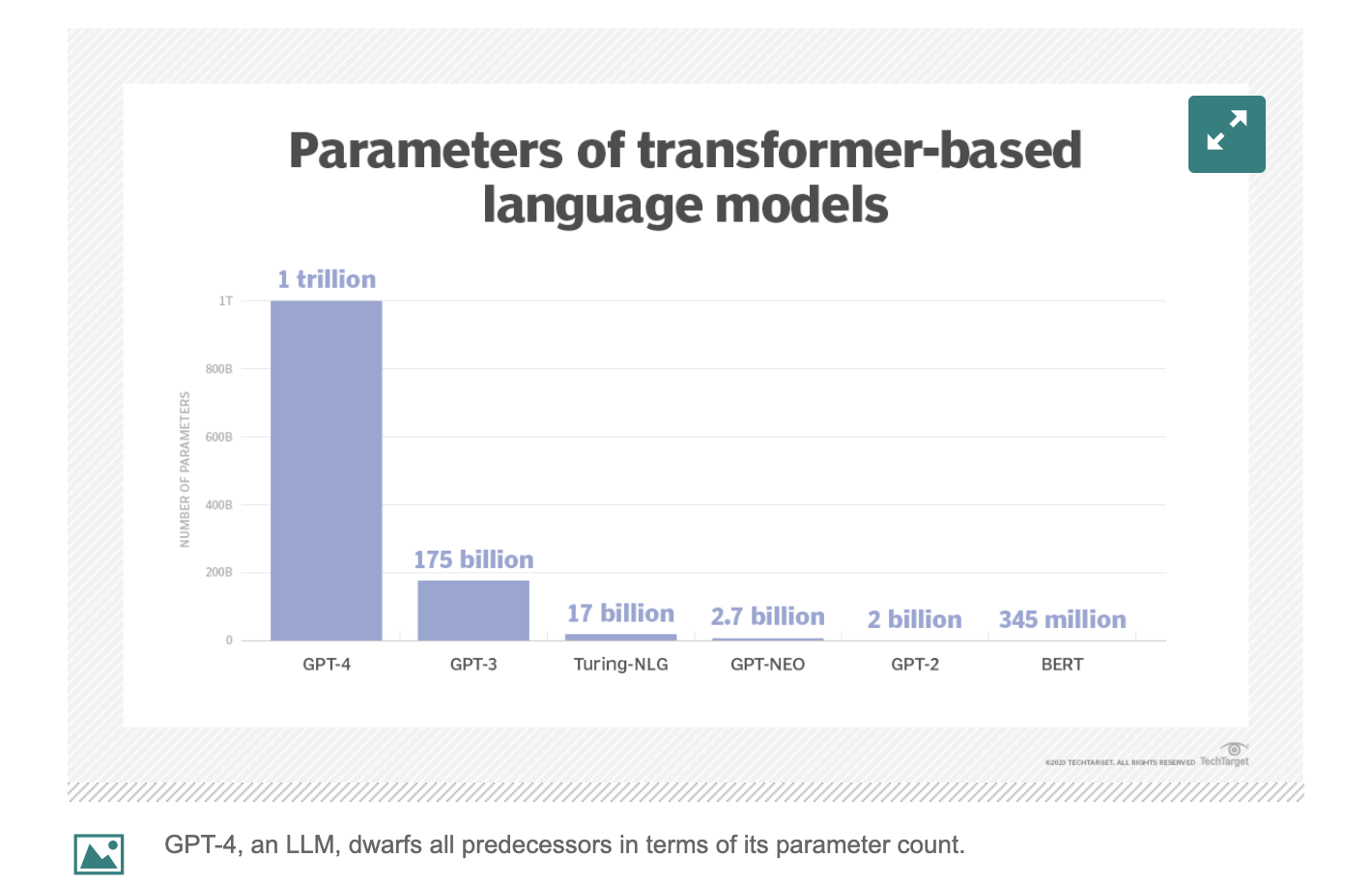
As the following diagram shows, LLMs have significantly more parameters embedded into their models than conventional ones – which increases the size of an LLM’s memory, as well as its performance.

Self-instruction bolsters LLMs

Much recent research focuses on building models that follow natural language instructions, e.g., figuring out the zip code for an address. These developments are powered by two key components: large pre-trained language models and human-written instructions. Collecting such instruction data is costly and often does not yield enough diversity as a result, especially as compared to the increasing demand for this developing technology. Self-instructing was thus devised as a solution to this issue by automating the instruction-data creation process.2


Workings of self-instruction

Self-instructing typically begins by compiling a small number – e.g., 175, as demonstrated below – of manually written instructions. The model is prompted to generate more instructions for new tasks by using the 175 original instructions given, and also creates potential inputs and outputs for the newly generated tasks. Various heuristics automatically filter out low-quality, repeated instructions, and add valid ones to the task pool. This process is then iterated until there are many tasks. Every time new instructions are generated, this enables the model to cover a broader range of topics because the data it is working with have expanded.

LLMs unburden cardiologists

Transfer learning allows LLMs to integrate into healthcare settings more easily, leveraging pre-trained models as a starting point for further training and adaptation to medical domains. Applying cardiovascular-specific fine-tuning – which involves training pre-trained LLMs on relevant data so they perform well on tasks within the field – ensures models have the most relevant and up-to-date medical knowledge at their disposal.3

LLMs diagnose heart disease, generate ECG diagnosis report

Figure 3, above, represents the architecture of how LLM flows of embeddings work and how this can be generated into ground-truth embeddings.

The methodology for generating reports with LLMs is as follows: Given that electrocardiogram (ECG) signals x = [x1, x2, … xt], learn a generated text embedding L = [L1, L2, … Lt], which is then decoded into natural language as reports or directly used for disease classification. In this study, the zero-shot classification approach achieved competitive performance with supervised learning baselines. Testing was done for five conditions, including normal ECGs and myocardial infarctions.4


LLMs in cardiovascular image segmentation 

Cardiac magnetic resonance image segmentation is a non-invasive imaging technique that visualizes the structures within and around the heart – a process that AI is making more efficient, accurate, and cost effective. Segmentation methods often rely on landmarks or key points that anchor a contour to specific and well-defined anatomical points, such as the apex of the left ventricle (LV). Models are trained to distinguish the target anatomical landmark and how to localize it by learning and following the optimal navigation path through the volume. One segmentation method involved testing 5,000 three-dimensional computed tomography volumes, achieving complete accuracy at detecting landmarks. Once specific landmarks are determined, AI finds the orientation and scale of the LV and infers its shape based on the appearances and shapes in the database on which it was trained. To track myocardial motion, segmentation is followed by a temporal tracking algorithm that follows the myocardial border across frames.5


Projections for digital health investments in 2023 show interesting trends

Limitations, other considerations 

AI was underutilized for a long time – and largely non-existent before that – but now overreliance is a greater risk: AI should be augmenting human expertise, not replacing it. This is especially true because the accuracy and reliability of LLM-generated output – which is of paramount importance in healthcare – cannot yet be guaranteed. 

Rigorous validation processes, continuous monitoring, and collaboration with medical experts are thus essential, making implementation expensive and resource intensive. Transparency in the development and deployment of LLMs is also crucial to ensure their ethical use and keep public opinion from souring on the tech.

Figure 4 above illustrates steps to take when implementing LLMs and what to keep in mind when developing them

LLMs have clearly already emerged as a revolutionary force that is here to stay, transforming industries and reshaping the future of AI-driven technologies. These powerful algorithms – fueled by DL techniques and vast, seemingly ever-growing datasets – are unlocking new possibilities that are poised to continue expanding, with healthcare being one of the biggest beneficiaries of this trend.

References:

1. Kerner, Sean Michael. What Is a Large Language Model (LLM)? – TechTarget Definition. WhatIs.Com, 7 Apr. 2023, http://www.techtarget.com/whatis/definition/large-language-model-LLM 

2. Kordi, Yeganeh, et al. SELF-INSTRUCT: Aligning Language Models With Self-Generated Instructions, 25 May 2023, arxiv.org/pdf/2212.10560.pdf 

3. Karabacak, Mert, and Margetis, Konstantinos. Embracing Large Language Models for Medical Applications: Opportunities and Challenges. Cureus, 21 May 2023, http://www.cureus.com/articles/149797-embracing-large-language-models-for-medical-applicat ions-opportunities-and-challenges#!/ 

4. Han, William, et al. Transfer Knowledge from Natural Language to Electrocardiography: Can We …, 4 Feb. 2023, aclanthology.org/2023.findings-eacl.33.pdf 

5. Dey, Damini, et al. Artificial Intelligence in Cardiovascular Imaging: JACC State-of-the-Art Review. Journal of the American College of Cardiology, 26 Mar. 2019, http://www.ncbi.nlm.nih.gov/pmc/articles/PMC6474254/

Digital Health Investments in 2022 and 2023 Investment Predictions

Introduction:

Digital health, i.e, the use of digital technologies to improve health outcomes that encompasses a wide range of products and services.These include mobile apps and wearables that help patients manage their own care; remote monitoring systems that allow clinicians to track patient data from afar; virtual reality tools for pain management and rehabilitation; artificial intelligence algorithms that analyze medical records for early detection of disease and readmission; telemedicine programs that provide remote consultation with doctors via video chat or phone call (and now even text message!).

With 2022 having a reasonable start amongst investments in digital health for the first half of 2022, a sharp decline persisted throughout the rest of the year. The deal flow and sizes equated to just over $15 billion dollars with over 575 deals throughout the entire year. Large investments declined for late stage companies by 60 percent and 33 percent for early stage investments compared to 2021.

Silicon Valley Bank’s recent report on digital health investments in 2022 revealed a marked decrease in software and artificial intelligence (AI) ventures that are transforming healthcare all across the board. According to the report, venture capital (VC) investments decreased in almost all sectors in healthcare and with Q4 of 2022 produced a sharp decline in new investments and more structured term sheets.

Market healthcare exits plummeted in the year 2022 with many plans being halted after a massive IPO craze during 2021 with healthtech and device companies. For healthtech companies, 2022 was not a great year for the performance of the stock market in the sector and investors are pushing for more M&A deals. Healthtech was on pace to break the 2021 deal amount for M&A but with slightly smaller deal sizes. With the acquisition of healthtech companies that picked up might mean consolidation of the sector but stronger companies in the near future. For device companies, 2021 was a big year in terms of IPO’s and M&A but when 2022 turned around many companies focused on cash flow and putting IPO’s and acquisitions on the back burner with vascular related exits equated to 3.

Active Investors and Current state of Digital Health:

The current state of digital health investments in 2022/23 is a reflection of the past few years. In 2016, there was an increase in investments due to an increase in funding rounds and valuation. In 2017, there was a decline in funding rounds but an increase in valuation. The same trend continued through 2018 with a decrease in funding rounds and another increase in valuation.

In 2022, we saw an even stronger focus on artificial intelligence (AI) as well as blockchain technology within the healthcare industry. AI will allow doctors to diagnose patients faster by using machine learning algorithms that analyze data from medical records or MRI scans; while blockchain technology will help protect patient privacy while also making it easier for patients to access their own information without having to go through their doctor first through applications and virtual care.

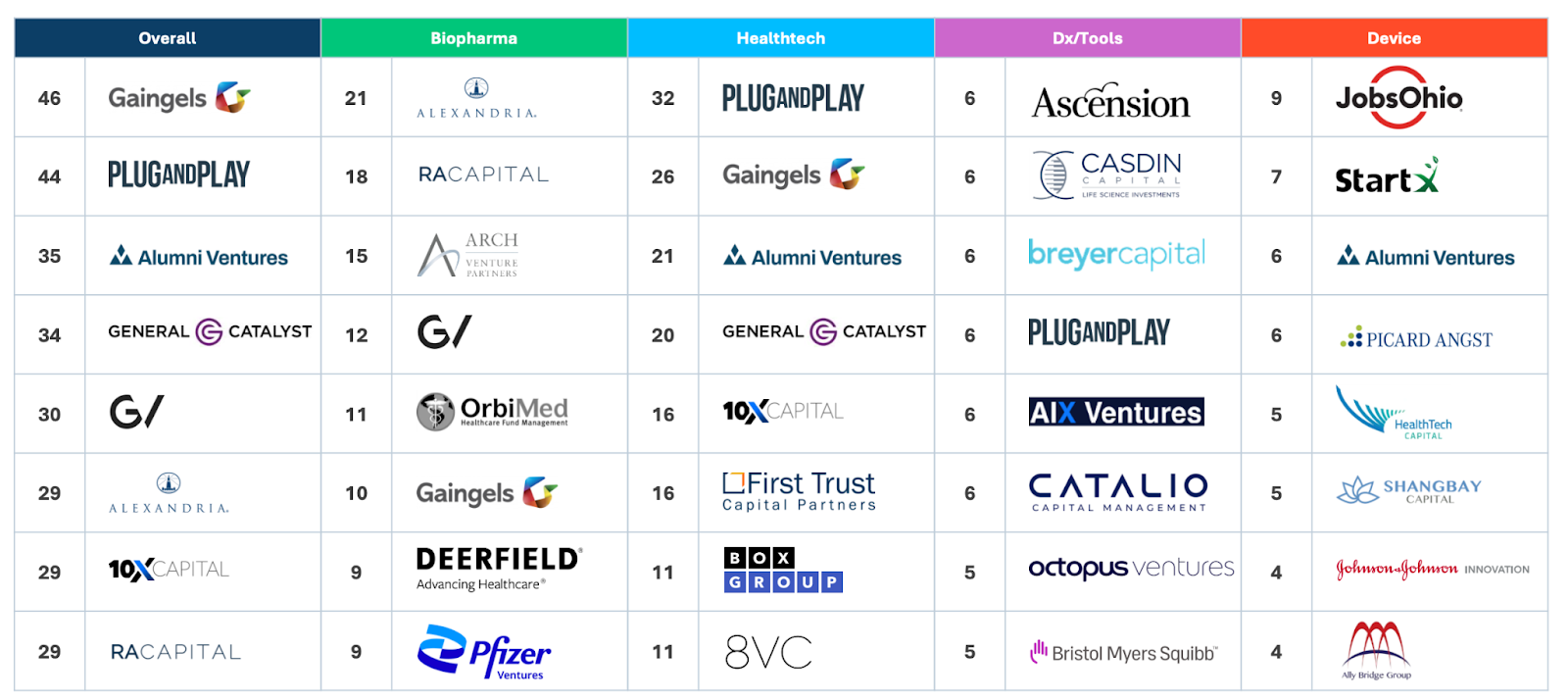
Some of the most active investors in the space for the year 2022 according to deals closed were:

  1. Gaingels –  24 
  2. General Catalyst – 20 
  3. Alumni Ventures Group- 15 
  4. GV – 10 
  5. Insight Partners – 9 
  6. A16z – 5 

The investment activity started to grow from 2022 – H1 2023, here we have a chart that discloses the growth from 2022 and Gaingels still looks like they are the most active in healthtech by deals closed: 

Institutional investors have dry powder ready to be deployed but from an entrepreneur perspective, that also means that investors have raised the bar on what milestones founders need to achieve before they begin to invest.

Projections for Digital Health Investments for 2023:

According to the Rock Health 2023 Q1 digital health funding, there have only been 6 mega deals that have raised 9 figures for the quarter listed:

  1. Monogram Health ($375M)
  2. Shiftkey ($300M)
  3. Paradigm ($203M)
  4. ShiftMed ($200M)
  5. Gravie ($179M)
  6. Vytalize Health ($100M)

Accounting for 40 percent of the total digital health funding in the industry. With these very few deals being completed, it shows that investors are being even more selective over teams and founders they already know so they can use some of the reserves they have stockpiled in their funds. For example, Paradigm is one of the mega deals that were done where General Catalyst and ARCH venture partners co-incubated the company that came out with a $203M series A round. Here we show some of the most active institutional investors in the seed and series A rounds across all domains in healthcare. This includes investments made in the U.S, EU, and UK (Figure 1):

Figure 1 Chart provided by Silicon Valley Bank H1 report 

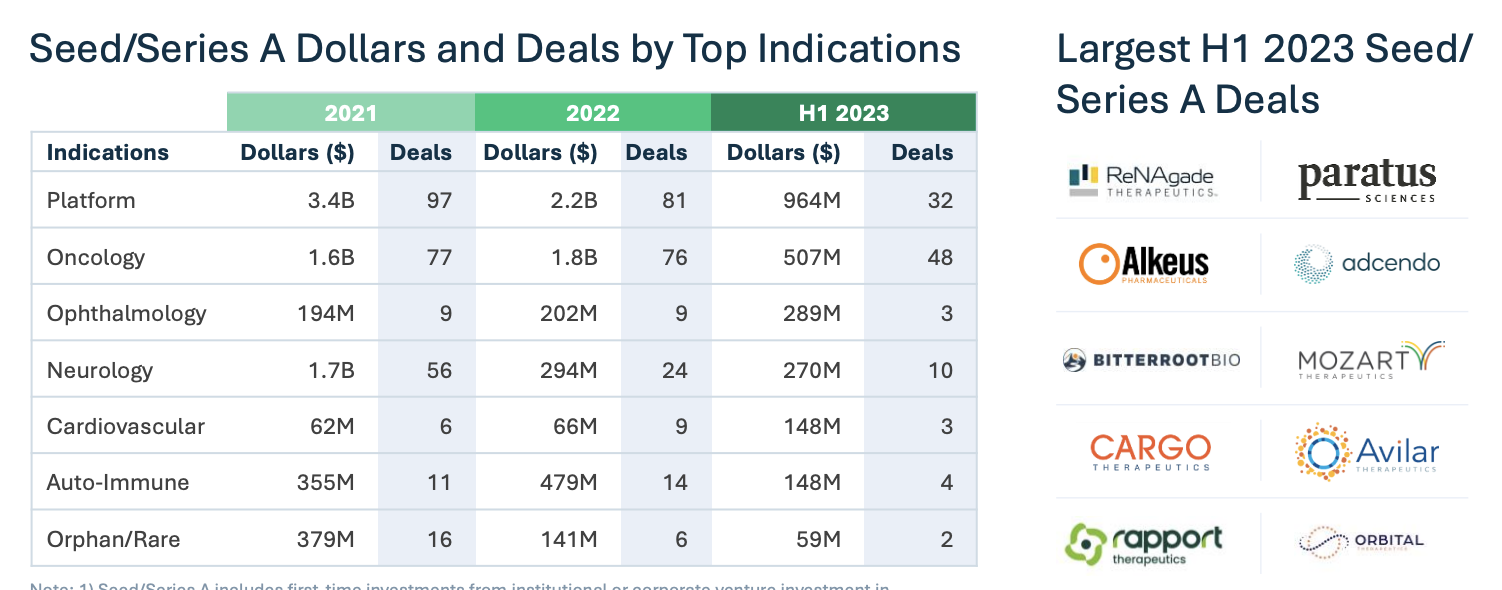
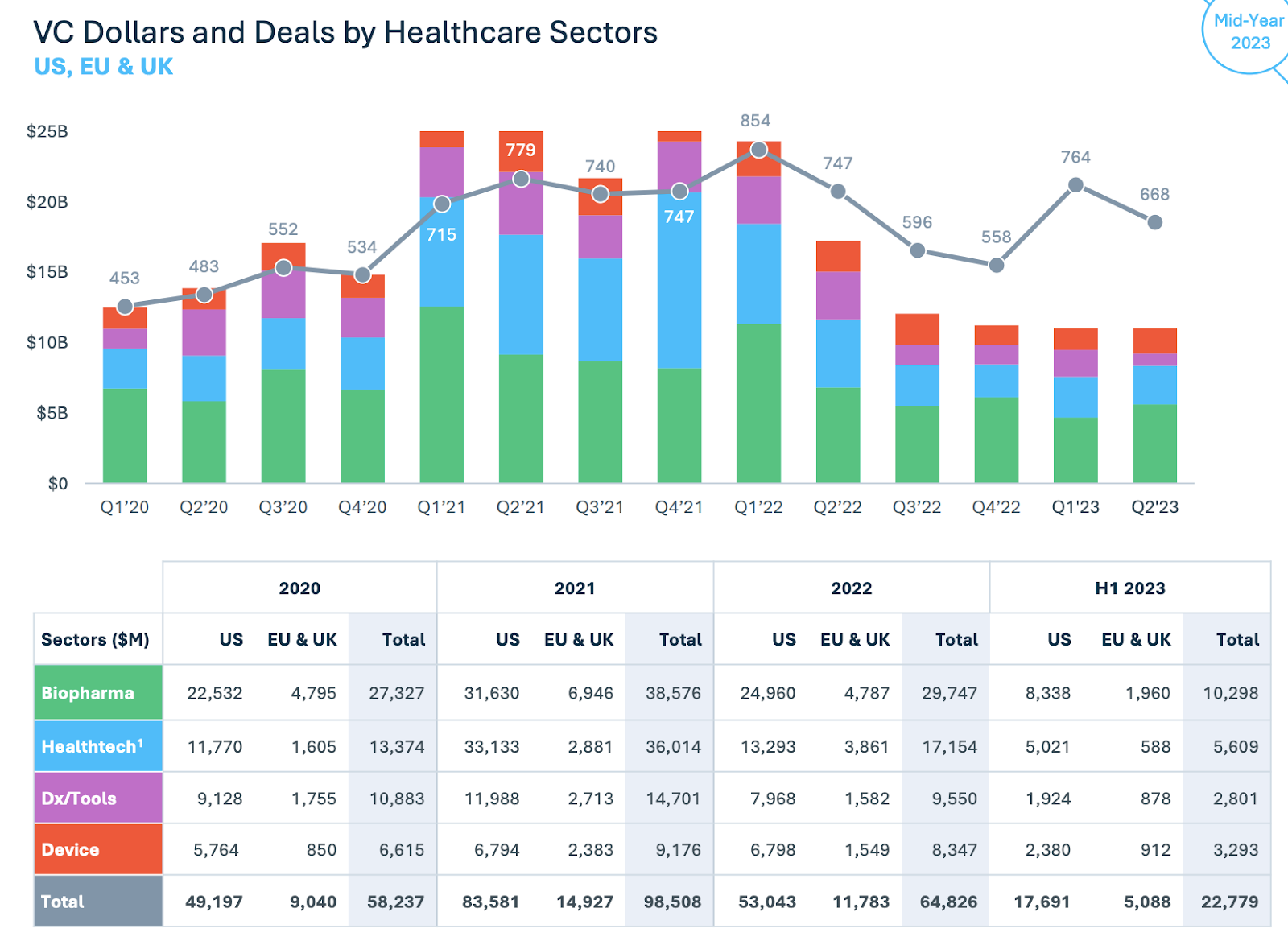
In Q’2 of 2023 we have seen an increase in funding amounts across verticals as seen in the chart below (Figure 2) that is parsed out by sector type:

Figure 2 Provided by Silicon Valley Bank 

In total, around $6.8 billion dollars has been invested into healthcare which covers Biopharma, Healthtech, Dx/Tools, and Devices in Q ‘1 of 2023. So the amount of capital is down but also stabilizing a bit with a percentage change in those sectors ranging anywhere from 10 percent to 66 percent decline compared to Q ‘1 of 2021. The largest amount of dollars that are being allocated toward specific indications are oncology in terms of the numbers of deals (17)  and platform indications with the largest amount of capital invested equating to $325 million to Q ‘1 of 2023.

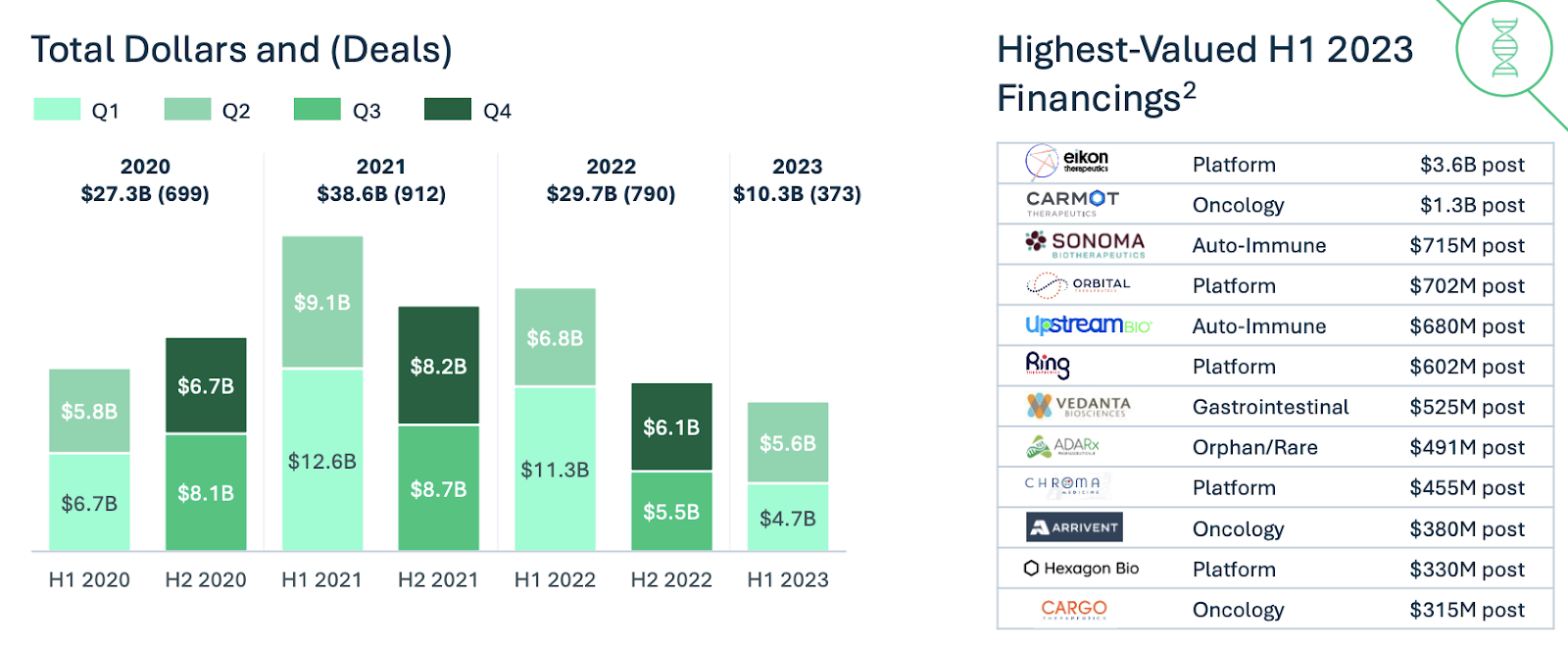
On the other hand, market economics has also played a large role in negative impacts on fundraising for digital health startups such as the collapse of Silicon Valley Bank, Signature Bank, and Silvergate Bank. Late stage companies had to seek assistance to be able to pay their staff and expenses which lead to seeking cash through alternative exit strategies like Public Benefit Corporation, debt financing, or liquidating assets within their business to stay afloat. While the digital health landscape seems unpredictable, there seems to be change coming on the horizon. However, late stage Biopharma companies seem like they have had a few winners in the raising capital space especially the platform based biopharma companies bringing in over $5.6B in Q’2 of 2023 as shown in Figure 3:

Figure 3 provided by Silicon Valley Bank H1 report

Some of the largest predictions have been that digital health investments will continue to stabilize throughout the year but at a decline compared to the year 2021. Some exports are saying that it may never get as high as the capital being allocated to companies in the year 2021. According to Silicon Valley Bank, they believe that the short term outlook is looking foggy but should have a strong finish during the 2nd half of the year. Some of the best companies in the world have grown to be the best and strongest companies coming out of uncertain times and I believe this year will be no different.

Impact of digital health investments:

Healthcare providers – Digital health investments are expected to provide a positive impact for the provider workflow both directly and indirectly. They can help providers streamline their processes through automation, intake more patients, provide better patient outcomes, and improve patient experience. 

Payers-  Chronic disease management is a large issue in the U.S. with the Center of Disease Control stating that 60 percent of Americans have a chronic condition. Digital health products can help build interventions between illnesses, nudges and patient education to help lower the cost of care. Care navigation is also a strong issue with only one out of ten Americans having the health literacy to be able to navigate the complex U.S. healthcare system. Services that can help offer patient hassle-free ways to manage their health plan, care coordination and utilization management will be beneficial in reducing costs. 

In conclusion, we saw a strong start to digital health investments during 2021, first half of 2022 and a decline since then in both early, growth, and late stage investments. As the first half of the year came to a close we have seen an increase in funding but at lower valuations of companies. The markets look like they are making a strong turnaround for the 2nd half of the year across all sectors.

Citation:

  1. https://www.svb.com/globalassets/trendsandinsights/reports/healthcare/healthcare-investments-and-exits-annual-report-2022.pdf?utm_source=svb&utm_medium=pr&utm_campaign=gb-2023-01-aw-tl-ag-na-lh-na&utm_content=1pr_pct_oc_na_di_na_lp_auto&mkt_tok=NjEwLUtBSy0yNjYAAAGJbFxNdxBtkpmFbZYduDKTsNnFSvweS-RX4S3Xm1Vg9m-Y3ie3dgvL7Xfv2fBurPz_KJjz2SNDKDUmsFmc7Iso8V5Sn3kX16cZlH5kg7aEph5l 
  2. https://rockhealth.com/insights/2023-q1-digital-health-funding-investing-like-its-2019/ 
  3. https://www.fdic.gov/bank/historical/bank/bfb2023.html 
  4. https://www.healthleadersmedia.com/finance/cas-safety-nets-lost-32b-first-18-months-pandemic 
  5. https://www2.deloitte.com/us/en/insights/industry/health-care/digital-health-plan.html 
  6. https://www.svb.com/globalassets/trendsandinsights/reports/healthcare/2023/healthcare-investments-and-exits-annual-report-q1-2023.pdf 
  7. https://www.svb.com/globalassets/trendsandinsights/reports/healthcare/2023/mid-year/healthcare-investments-and-exits-mid-year-2023.pdf 

Smart innovations yield accessible, affordable healthcare

Part #2 of the Bill Gates Letter

The Gates Foundation has made significant improvement to health equity with their investments in countries overseas and some of the partnerships they were able to secure that helps with access to care, medical equipment, vaccines, health guidelines, supplies and other essentials needed to meet the benchmark of a decent lifestyle. For more advanced nations, the next steps are to continue to grow and shift to proactive care by using advanced technologies to help predict, prevent illness and offer precise medicine for all. With the vast amount of medical data available within EMR systems, there are opportunities to help predict illnesses from occurring in the first place and help physicians use technologies that will enhance the patient experience, better patient outcomes, and lower the cost of care for healthcare institutions. 

In the United States alone, healthcare spending makes up almost 20% of the GDP which equates to $4.5 trillion in 2022 and is growing. About $220 Billion dollars goes towards cardiovascular disease cost of care and reports state that the numbers will only increase. With programs that reflect value based care which can help deter healthcare institutions from reactive based care to proactive based care and medicare incentivizes physicians to help lower the cost of care. There are shared savings programs that Medicare has announced and that has spurred the healthcare industry to change the way they think of healthcare and invest more towards digital health tools and services. In the startup world, many startups started to target domains such as: Cardiovascular Disease, Cancer, Mental Health, Stroke, Ophthalmology,  Surgery etc. 

ScriptChain Health uses AI to predict Heart Disease Readmission which is a large problem that aligns directly with Value Based Care. Readmission rates in the US are shockingly high that can go as high as ~33% within a 30 day time frame depending on the patient’s condition and demographic data. Hospitals have been getting fined by the government to reduce their readmission rates and insurance companies have been cutting their reimbursements for patient care when patients get readmitted for the same illness. That cost then gets allocated to healthcare institutions’ bottom line that eats into their profits. Many healthcare systems have lost billions of dollars annually due to large variable costs on their balance sheets and some healthcare systems are putting technologies to the test to help reduce healthcare costs and allocate the right resources to the correct patient. ScriptChain Health uses state-of-the-art deep learning models to not only identify high risk patients for clinicians but to then recommend treatment options to optimize the patient stay and discharge with more confidence. With the prediction platform, clinicians can utilize the hospital’s resources more effectively on a per patient basis which can result in lower cost drivers. 

Heart Failure is a very difficult disease to manage and tends to have the highest readmission rate. One case study to understand how ScriptChain Health’s product uses AI for the physician setting is as follows:

Use Case:

Case Manager Lisa has 3 patients (Mr. Thurber, Mrs. Johnson, and Mr. Danner) who were admitted with CHF and are now scheduled for discharge today.  In an effort to decrease readmission the hospital has implemented standard post-discharge CHF care.  Each patient will receive a phone call from a nurse in 72 hrs to check up on the patient, have a nurse visit the patient at home 1 week post-discharge, and will be scheduled to see their physician in 2 weeks after discharge.   

However, Lisa’s hospital has now implemented ScriptChain which uses AI and deep machine learning to more acutely predict each patient’s risk of getting readmitted to the hospital in 30 days with another CHF exacerbation.  Using ScriptChain, Lisa can now determine that Mr. Thurber had a 90% of readmission while Mrs. Johnson has a 50% risk and Mr. Danner has a 10% risk.  This allows Lisa to personalize post-discharge CHF care and better allocate resources in a more efficient and effective manner.  The post-discharge care changes from the standard protocol in the follow ways:

Mr. Thurber: nurse call in 24 hrs and then weekly for 30 days, home nurse visit in 72hrs, CHF clinic office visit in 1 week, physician office visit in 2 weeks

Mrs. Johnson: nurse call in 72hrs, home nurse visit 1 week, physician office visit at 2 weeks

Mr. Danner: nurse call in 1 week, physician office visit at 4 weeks

Sure enough, none of these patients are readmitted in 30 days.  Given Mr. Thurber’s significantly high risk of readmission, he received more intensive post-discharge care to ensure the patient is getting the care he needs at home.  Mrs. Johnson is average risk and receives the standard protocol.  As Mr Danner has a very low risk of readmission, he does not need all the resources provided.  ScriptChain has allowed better resource allocation resulting in improved patient care and decreasing readmissions.  With the reduced readmission and improved resource allocation, Lisa’s hospital has saved millions of dollars.

That not only reduces cost of care for everyone involved but betters patient outcomes in the process by focusing on the higher risk patients and taking the right steps towards providing the right education, follow ups, and additional care. To provide a better user experience, ScriptChain Health invested heavily in research to figure out how they can ensure ease of use of the application and create efficiency for adoption. Many clinicians surveyed said they would not use any products if it causes inefficiencies in their work setting and make sure it is not “heavy looking.” That set up how we designed our product by putting our UI/UX at the forefront of software development and making sure it integrates into EMR systems instead of using another browser to get access to the product.

Taking everything into account, Bill Gates see’s a bright future with the use of AI to help solve some of the world’s largest problems and making smart investments to help achieve those goals. ScriptChain Health is making sure to use AI with the prediction platform to help lower the cost of care for heart disease and better patient outcomes. 

Citations:

  1. https://www.cms.gov/research-statistics-data-and-systems/statistics-trends-and-reports/nationalhealthexpenddata/nationalhealthaccountshistorical 
  2. https://www.ncbi.nlm.nih.gov/pmc/articles/PMC8579470/#:~:text=Males%20had%20a%20readmission%20rate,%2D90%20years%20(30%25)
  3. https://www.hhs.gov/about/news/2022/08/30/medicare-shared-savings-program-saves-medicare-more-than-1-6-billion-in-2021-and-continues-to-deliver-high-quality-care.html 

Core Pain Points in Cardiology Departments

Studies have shown that major struggles in cardiology departments have led to less-than-optimal treatment for Cardiovascular diseases (CVDs). These struggles include a lack of competency in the assessment of risk factors in CVDs, lack of communication from cardiologists, the burn out and overworking of cardiologists, and a distrust in diagnoses and referrals of other physicians. A study by Academy for Healthcare Education Inc. found that most cardiologists rate their competencies low in the assessment of conditional risk factors in CVDs. The study also found that cardiologists struggle to enhance patient action towards modifying risk factors through medical intervention and lifestyle changes. These struggles lead to hindered care and higher treatment costs from misdiagnoses and readmissions.

According to a survey done by The Physician Foundation 80% of physicians report being overextended and overwhelmed.  Burnout can result from excessive workload, diminished sense of accomplishment or competency, and general exhaustion from a physician’s lifestyle. There has been an upwards trend in the rate of physicians and specifically cardiologists that report burnout. Rising rates of burnout have catalyzed further doubts in communication and competencies from cardiologists.

These continued struggles have contributed to the ever-rising number of cardiovascular disease cases and deaths. Studies in the Journal of the American College of Cardiology, have suggested that CVD and risk factors will continue rising at significant rates over the next few decades. The study projects that heart failure cases in the US will increase by 33.4% and hypertension will increase by 25.1% by the year 2060. These increases will disproportionately influence ethnic and racial minorities with dramatically higher risk factors and growth of CVD’s in these communities.

To remedy this, researchers recommend an emphasis on improving the effectiveness of treatment for at-risk individuals. More effective and pinpointed treatment, lowers death rates, and leads to better care for CVDs. ScriptChain Health offers AI technology that targets these specific pain points, aiming to decrease the costs and deaths of CVD. ScriptChain’s AI prediction platform collaborates with electronic healthcare systems to identify risks in heart disease patients and provides recommendations for physicians.

ScriptChain Health’s prediction platform allows cardiologists to produce better patient outcomes and reduces doubts of cardiologists regarding competency and communication. The assistance of predictions also reduces the factor of physician burnout, again improving level of care. The culmination of these factors reduces over and under treatment of patients, creating better results and lowering readmission rates. Reducing readmission rates and unnecessary treatment, lowers costs of treatment for hospitals and automating the workflow can help create more efficiencies. Lowering costs allows for higher rates of patient intake and cost savings for healthcare systems looking to better their bottom line. The lowering of costs and increase in quality of care as a result of ScriptChain Health technologies can aid in subduing the increasing rates of CVDs, and are specifically effective for communities with racial and ethnic minorities where FQHCs can directly make a positive impact.

Citations:

-Hall, Justin. “The Impact of Covid-19 on Critical Cardiac Care and What Is to Come Postpandemic.” Future Cardiology, vol. 17, no. 1, 2021, pp. 7–10., https://doi.org/10.2217/fca-2020-0093.

-Hayes, Sean M, et al. “Issues and Challenges in the Assessment, Diagnosis and Treatment of Cardiovascular Risk Factors: Assessing the Needs of Cardiologists.” BMC Medical Education, vol. 8, no. 1, 2008, https://doi.org/10.1186/1472-6920-8-30.

-Mendoza, Walter, and J. Jaime Miranda. “Global Shifts in Cardiovascular Disease, the Epidemiologic Transition, and Other Contributing Factors.” Cardiology Clinics, vol. 35, no. 1, 2017, pp. 1–12., https://doi.org/10.1016/j.ccl.2016.08.004.

-“New US Population Study Projects Steep Rise in Cardiovascular Diseases by 2060.” American College of Cardiology, American College of Cardiology, 1 Aug. 2022, https://www.acc.org/About-ACC/Press-Releases/2022/08/01/16/37/New-US-Population-Study-Projects-Steep-Rise-in-Cardiovascular-Diseases-by-2060.

-Panagioti, Maria, et al. “How to Prevent Burnout in Cardiologists? A Review of the Current Evidence, Gaps, and Future Directions.” Trends in Cardiovascular Medicine, vol. 28, no. 1, 2018, pp. 1–7., https://doi.org/10.1016/j.tcm.2017.06.018.

Bill Gates Letter “The Age of AI has Begun” Thoughts (Part 1)

Bill has been spending most of his time in philanthropy which has become his primary occupation, and has been contemplating the ways in which artificial intelligence can be leveraged to mitigate some of the most severe global inequities. The most grievous inequity on a global scale is in healthcare, with 5 million children under the age of 5 succumbing to preventable causes, such as malaria, annually. While this figure is down from 10 million two decades ago, it is still an alarmingly high number, and the vast majority of these children are located in impoverished countries. The use of AI to save the lives of children is an excellent application of this technology and should be looked into.

In the U.S, the best and most promising strategy to reduce inequality for quality of education is by improving math skills in students. Research shows that proficiency in mathematics provides a foundation for success in one’s career path regardless of industry. However, math achievement rates have been declining over the years, especially among low-income, latino and black students. AI has the potential of reversing that trend if used correctly. 

The Gates foundation is anticipating that AI will continue to make an impact in issues that align with their mission. It is vital that everyone, including low-income individuals benefit from AI, not just the affluent. Governments and philanthropic organizations must step in to ensure that AI reduces inequity rather than contributing to it.

AI has the potential to improve education and global health because those two areas have the highest demand for qualified professionals to meet the demand for their services. AI can health reduce the disparity and inequity with these skill sets that are in demand and should be the primary focus of helping to ensure everyone benefits from these technological advancements. With healthcare being a large target for how large of an impact AI can make, let’s take a look into where AI may be useful.

AI in Healthcare

Healthcare is an area where AI can have a significant impact by improving the efficiency of medical professionals and reducing the burden of administrative tasks. Examples of these tasks include noting physician notes, filing insurance claims, and dealing with paperwork. Additionally, AI can be utilized to aid providers in poor countries where unfortunately under-5 deaths are prevalent by allowing for greater productivity and even enabling patients to seek advice on health issues that may arise.

The AI models used in poor countries will need to be trained on different diseases and languages than those utilized in wealthy countries since the features needed during the training will vary based on several social determinants and comorbidities. Furthermore, they will need to factor in unique challenges, such as access to healthcare that can change the outcomes of illnesses. Demonstrating evidence of the overall efficacy of AI in healthcare will be crucial, despite the fact that AI is not infallible and will make mistakes. Therefore, AI must undergo rigorous testing and regulation to ensure that it is safe and effective in practice which is what the FDA does today in the United States.

AI will also accelerate the pace of medical breakthroughs by processing vast quantities of data that are difficult for humans to manage. AI can identify pathways, search for pathogen targets, and design drugs accordingly to produce drugs faster and less costly. The next generation of tools will be even more efficient, predict side effects, and determine dosing levels. The Gates Foundation has been using these tools to address the health problems that disproportionately affect impoverished populations, such as malaria, TB, and AIDS.

The Gates Foundation has done several equity investments and philanthropic donations to multiple companies and nonprofits. One of which is Vir Biotechnology that is developing therapies for HIV and Malaria where the Foundation has made a $40M equity investment and $10M grant. The San Francisco based Vir is known for developing the COVID-19 monoclonal antibody called sotrovimab with Glaxo Smith Kline, which the U.S. Government has been acquiring from them to combat the Omicron virus. The approach that Vir Biotechnology is taking is to use the capital to extend their treatment approach and start clinical trials with a vaccine to help suppress HIV. 

Another initiative of the Gates Foundation was to announce a 4 year commitment with the Swedish government with a $150M financing to help health supplies and vaccines for middle and low income countries.The financing started in 2022 and will continue until 2025. The first commitment to UNICEF came in 2015 when the Gates Foundation committed $15M to prevent vaccine shortages in Nigeria and have continued to finance the health inequities in the world. The capital has been deployed from the $2.5B Strategic Investment Fund and will help continue financing low and middle income countries to have adults and children access to essential healthcare. Over the years the Gates Foundation has made a handful of donations and investments annually to help speed up the research and development of more affordable care all over the world. 

Bill Gates believes that governments and philanthropic organizations should provide incentives for companies to share AI-generated insights on crop and livestock management in poor countries. In this way, AI can contribute to the reduction of inequity in global health.

In conclusion, AI has the potential to make a great impact in healthcare, provided it is utilized with care and good judgment. AI can enhance the efficiency of medical breakthroughs and improve medical services. I am looking forward to how much AI can improve medical services and get the healthcare industry in the US to move from reactive based care to proactive based care. ScriptChain Health is strongly pushing forward with our product and FQHC’s can greatly benefit from their services since the highest readmission rate and access to care for underserved populations are served in the FQHC populations as part 2 of this blog.

Citations:

  1. https://www.gatesnotes.com/The-Age-of-AI-Has-Begun
  2. https://www.geekwire.com/2022/vir-to-extend-covid-19-treatment-approach-to-hiv-malaria-with-50m-from-gates-foundation/ 
  3. https://www.gatesfoundation.org/ideas/media-center/press-releases/2021/11/unicef-sida-150-million-guarantee-access-vaccines-health-supplies 

How ScriptChain Health Leverages Scrum for Iterative Projects

What is Agile?

Agile is an innovative approach to project management and development based on incremental working. This way of working was pioneered in the 1940s by Toyota. They developed a system of production with smaller consistent milestones.

When projects are broken into smaller more frequent milestones there are more opportunities to revise and be flexible within the work being done. With more consistent check-ins there is faster feedback on the work being done, and the ability to change prioritizations within a project. This allows teams to actively react to feedback and identify problems early leading to higher satisfaction rates and more successful launches.

There are specific Agile frameworks to help maximize the efficiency of the project management approach. A company cannot just go Agile, they must follow a framework and integrate the system into work habits. One of these frameworks is called SCRUM. SCRUM is a popular framework for software development and digital production. SCRUM uses small milestones broken into what are called sprints. Sprints are periods ranges of about two to four weeks, in which teams focus on a specific list of tangible tasks. Sprints provide lists of work increments that show achievable progress and set up for the next sprint. The SCRUM framework has helped teams propel their efficiency and project development.

The efficient and effective Agile method has made it very appealing to startups. Agile, and more specifically the SCRUM model, allow startup teams to produce tangible progress quicker. This resulting tangible progress opens doors to immediate feedback and the opportunity to immediately present the work and grow the work of startups.  

Agile also helps create strong coordinated teams within startups. The framework helps to create organizational structure within a company. It defines the roles of people on a team and allows co-workers to review and report on others’ work. Through this structure strong teams are formed with collaborative workflow and high efficiency rates.

Agile in Digital Health and ScriptChain

Agile and SCRUM are specifically effective in the digital health domain. Precision and quality are extremely important in digital health. With the Agile framework, companies are able to effectively update and revise software. Consistent updates and feedback from the Agile framework allow teams to ensure the quality of their software.

ScriptChain Health uses the Agile project management method using a program called JIRA. They use the SCRUM framework to organize work into Sprints. With this method ScriptChain health is able to consistently update their product and software to be the most effective. This is an extremely important consideration when working with medical devices. The SCRUM method allows real time updates to the software, fixing problems early and adding features that can be quickly applied. ScriptChain Health’s use of Agile allows it to be an innovative company committed to excellence in the field of digital health.

During the market downturn, it is very important for companies to understand and use the scrum framework to continue with satisfying their customers needs and get new products/features completed. It is very easy for companies to lose track of launch dates and backlog many tasks. In order to support current customers and continue to grow staying agile can help deliver products fast while keeping costs down. Sometimes going back to the fundamental approach of how to build products can benefits companies in the long run even though there will be short term pain to get the organization started.

Citations:

Atlassian. “Get Started with Agile Project Management.” Atlassian, https://www.atlassian.com/agile/project-management. 

Atlassian. “Agile vs. Waterfall Project Management.” Atlassian, https://www.atlassian.com/agile/project-management/project-management-intro.

The real cost of readmissions for Heart Disease

“Hospital, Corridor, Operating Room”, via Cezjaw on Pixabay

Hospital readmission reflects a general inadequacy in how patients with heart disease are treated in the U.S. healthcare system. Additionally nearly 20% of all patients are readmitted within 30 days of discharge reflects a necessity for change. This demonstrates that our healthcare system is primarily focused on treating problems rather than preventing them, which is staunchly inefficient when it comes to cardiovascular distress.

The dangers of repeated and elongated hospital stays- specifically accentuated in older populations- comes with cognitive decline, bacterial risk, and financial difficulty. Inpatient stays can be long, financially draining, and result in loss of sleep. There are so many unpleasantries associated with admission to begin with, consistent readmission only exacerbates those issues. However, that’s only what’s reflected on the patient’s side of things. What does readmission cost on the hospital’s end?

Inpatient care is by a longshot the most expensive type of care a hospital can provide, so it’s rather concerning that it’s also what so many patients undergo (especially if they don’t need to be admitted in the first place). Every day, $72.2 Million are lost to inpatient readmission, accounting for a $101.2 Billion loss

from overtreatment as a whole. 46% of healthcare treatment costs are for heart disease treatment, with heart disease staying at the leading cause of death in the United States.

Readmission for heart disease is sometimes caused by an unrelated disease caught when in the hospital, in most cases however- it is instead caused by recurring heart failure. 22% of heart failure patients later experience readmission, oftentimes caused by a faulty prognosis. Readmission rates for cardiovascular disease are further amplified within nonwhite, impoverished, and/or elder populations.

Every year, Americans experience around 1.5 million strokes and heart attacks- costing the U.S. healthcare system an annual $320 billion; in 2011 it was reported that readmission costs each American hospital $2.06 billion, and has since been on an upward trend. It’s easy to see that hospital readmission, a majority of which are due to diagnostic error and misjudgment on the part of the provider, presents a major financial burden in healthcare.

Here at ScriptChain Health, we estimate a 10% reduction of cost in heart disease management with our predictive AI software. Using our integrated SATs and federated learning model, our algorithm can maintain a 94% accuracy rate in predicting if someone will have heart disease long before it occurs. Artificial intelligence is beneficial in this space due to its lack of chances of human error; human cardiologists, on average, have an accuracy rate of 78%- making our algorithm 16% more accurate than its human alternatives. Combining AI with physician expertise can enable better patient outcomes and health equity amongst those most in need. Once predicted, our software can provide resources for preventing heart failure, heart attacks, and/or strokes altogether- this can be via increased accessibility to healthcare providers, easier distribution of prescriptions, as well as straight-forward graphs demonstrating a patient’s heart health. With ScriptChain Health in place, we estimate the saving of $69,405,352.71 by certain hospitals, streamlining connecting with specialists and stopping heart health decline in its tracks.

Citation:

Lawson, C, et al. “Trends in 30-Day Readmissions Following Hospitalization for Heart Failure by Sex, Socioeconomic Status and Ethnicity.” EClinicalMedicine, U.S. National Library of Medicine, 14 July 2021, https://www.ncbi.nlm.nih.gov/pmc/articles/PMC8283308/.

Hlatky, M, et al. “Diagnostic Accuracy of Cardiologists Compared with Probability Calculations Using Bayes’ Rule.” The American Journal of Cardiology, U.S. National Library of Medicine, https://pubmed.ncbi.nlm.nih.gov/7081073/.

Stinson, Claire. “Heart Disease and Stroke Cost America Nearly $1 Billion a Day in Medical Costs, Lost Productivity.” CDC Foundation, U.S. Centers for Disease Control and Prevention (CDC), 29 Apr. 2015, https://www.cdcfoundation.org/pr/2015/heart-disease-and-stroke-cost-america-nearly-1-billion-day-medical- costs-lost-productivity.

The Importance of AI Processes in the Digital Health of Tomorrow

Authors: Moh Noori and Ben Vitenson

Opportunities of AI in Healthcare?

“There are things that machines will never do well, and then others where they’ll be exceeding what any human can do … when you put the two together it’s a very powerful package.” Eric Topol, Cardiologist, and founder of the Scripps Research Translational Institute.

The healthcare industry is being revolutionized with the further introduction of machine learning and artificial intelligence. Artificial intelligence has proven to be capable of producing predictions and making decisions that humans alone could not produce. The combination of AI and machine learning predictions or contributions mixed with the knowledge of human physicians has strongly improved healthcare, many times decreasing costs to patients and increasing successful treatments. This success has led to an ever-growing market for AI in healthcare.

The market for artificial intelligence in 2021 was estimated to be worth around 11 billion dollars worldwide. It is forecasted that this industry will grow to be worth around 180 billion dollars by the year 2030. The industry is highly specialized, with most companies developing AI that pertains to specific medical practices. For example, ScriptChain Health focuses on preventative care and predictions for heart failure, hypertension, atrial fibrillation, and readmission using tabular and text based data. Most start-ups focus on training AI with specific intention towards certain conditions, like ScripChain Health has done for cardiovascular diseases. By specializing on certain conditions AI healthcare companies have maximized the quality and function of their AI and have been able to be more effective with implementation. The largest challenge to AI healthcare companies is the risky integration of their technologies and the conservatism of the healthcare industry. The healthcare industry in general is conservative and hesitant to fully integrate new technologies because of the implications they can have on patients’ well-being. Most hospitals view the risk of full AI implementation to be high but have been improving over the years. Nevertheless, as digital health is becoming more prominent and AI solutions are improving there is a gradual increase in the willingness of hospitals for AI implementation. ScriptChain Health has come up with a plan to be able to minimize the fear of using such technologies and to help physicians adapt to technologies to assist them in their everyday responsibilities of identifying and diagnosing high risk patients.

To minimize risk and maximize efficiency of their AI technology, ScriptChain Health uses federated learning systems to train their AI. Federated learning systems use multiple sets of shared data to collaboratively train a deep learning global model in a distributed way using alternative devices. Multiple parties download a model and share data independently to create a collaborative and iterative learning system that is fully encrypted. Federated learning is one of the methods used to improve AI technology in healthcare. Other common systems and methods are SATs, Graph Neural Networks, and cross validation as testing methods. Transformers encode input sequences in AI, making the AI self-attentive and able to place different significance levels on data. Graph Neural Networks are used to interpret graphs and create inferences based on the data in graphs. With the combination of transformers and Graph Neural Networks, AI can create self-attentive inferences based on data that is realistically weighed. Lastly, many AI systems include cross validation testing. Cross validation testing uses different data iterations to train and check AI predictions. Cross validation ensures the most accurate outcomes are produced and is essential with AI in healthcare. ScriptChain Health AI employs the methods described as well as others to produce useful and accurate predictions for heart disease. Reliable and efficient AI systems are producing more healthcare solutions and launching the AI healthcare industry. Today is the time to make sure that AI models are well rounded by being trained on diverse datasets to represent the U.S. and continue to be retrained in real time by adding more workers to our global model. With the help of healthcare institutions, we can ensure better patient outcomes through prevention and reduce the cost of care for all.

References:

Davenport T, Kalakota R. The potential for artificial intelligence in healthcare. Future Healthc J. 2019 Jun;6(2):94-98. doi: 10.7861/futurehosp.6-2-94. PMID: 31363513; PMCID: PMC6616181.

Kulkov, I. (2021), “Next-generation business models for artificial intelligence start-ups in the healthcare industry”, International Journal of Entrepreneurial Behavior & Research, Vol. ahead-of-print No. ahead-of-print. https://doi.org/10.1108/IJEBR-04-2021-0304

Stewart, Conor. “AI in Healthcare Market Size Worldwide 2030.” Statista, 28 Sept. 2022, https://www.statista.com/statistics/1334826/ai-in-healthcare-market-size-worldwide/#statisticContainer.